

Featured content

Why authenticity is key for biopharma leaders
Drawing on more than 20 years in the industry and a few unexpected lessons, CPHI Awards 2026 – Woman of the Year finalist, FUJIFILM Biotechnologies’ President and Chief Operating Officer Maja Pedersen, reflects on how leading as your authentic self produces better outcomes for teams, organisations and patients.
 Report
CPHI Milan 2026 preview: key themes and emerging trends
Explore seven expert perspectives on the technologies and challenges shaping the future of pharmaceutical development and manufacturing.
 Article
European Pharmaceutical Review Issue 2 2026
EPR Issue 2 includes articles on manufacturing, drug formulation, microbiology, downstream bioprocessing, and more.
 Opinion
What will shape the future of advanced therapies in Europe?
Following his opening keynote at this year’s Advanced Therapies Europe conference in Barcelona, Professor Jacob George, MHRA Chief Medical & Scientific Officer, explores the evolving regulatory landscape for advanced therapy medicinal products.
News
 News
NewsRoche licenses novel RNAi therapy from Rona in $1bn obesity deal
Agreement targets RNAi therapy with a unique mechanism that distinguishes itself in the increasingly crowded incretin therapy landscape for obesity and metabolic disease.
 News
NewsEuropean Pharmacopoeia launches working party for 3D-printed medicines
The new group will develop pharmacopoeial quality standards for 3D-printed medicinal products, reflecting the technology’s growing role in personalised medicine manufacturing.
 News
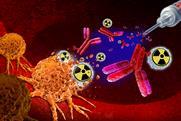
NewsRayzeBio’s alpha-based radiopharma therapy strikes hot in first Phase III readout
Topline results for the alpha-isotope based targeted radiopharmaceutical therapy highlight significant improvement in progression-free survival in SSTR-positive GEP-NETs.
 News
NewsFDA approves Roche’s Tecentriq immunotherapy combination for dMMR colon cancer
Authorisation positions monoclonal antibody as a new post-surgery standard of care in stage III deficient mismatch repair colon cancer.
From our partners
European Pharmaceutical Review Issue 2 2026
EPR Issue 2 includes articles on manufacturing, drug formulation, microbiology, downstream bioprocessing, and more.

Demonstrating airflow integrity and VHP compatibility in automated settle plate monitoring
Download this application note to learn how the MAS-100 Libra® supports automated settle plate exposure while maintaining airflow integrity, first-air conditions and effective VHP decontamination in critical aseptic environments.

European Pharmaceutical Review Issue 2 (2026): Micro/RMM In-Depth Focus
As pharmaceutical microbiology evolves, manufacturers are balancing contamination control, regulatory expectations and the need for faster, more actionable data. This In-Depth Focus explores emerging approaches across microbiological testing, monitoring and rapid methods.
Opinion and interviews

What will shape the future of advanced therapies in Europe?
Following his opening keynote at this year’s Advanced Therapies Europe conference in Barcelona, Professor Jacob George, MHRA Chief Medical & Scientific Officer, explores the evolving regulatory landscape for advanced therapy medicinal products.

How can we ensure consistency in decentralised cell therapy manufacturing?
Following her presentation at Advanced Therapies Europe, Charlotte Serra navigates the complexities of decentralised cell therapy manufacturing.
- Previous
- Next








Join now
Unlock exclusive industry insights
- Bookmark articles and resources to access anytime
- Enjoy free access to industry leading resources, webinars and insights
- Stay informed with the latest news and breakthroughs in drug discovery
- Receive updates and recommendations tailored to your research interests
Upcoming Webinars
Webinar
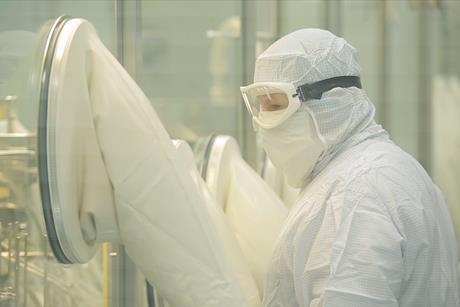
From passive to active air monitoring in aseptic filling: a risk-based approach to replacing settle plates
In this webinar, Particle Measuring Systems will share a case study of a biopharmaceutical company developing and applying a structured global rationale for the implementation of continuous viable environmental monitoring with a single-use microbial impactor within aseptic manufacturing environments.

Webinar
The impact of negative control stability on recombinant endotoxin testing
Discover how PYROSTAR™ Neo+ supports stable negative control (NC) performance for sensitive and precise recombinant endotoxin testing.

Webinar
Building quality and consistency into accelerated cell and gene therapy development
How can cell and gene therapy manufacturers move programmes forward faster without compromising quality, scalability or regulatory readiness?
From passive to active air monitoring in aseptic filling: a risk-based approach to replacing settle plates
The impact of negative control stability on recombinant endotoxin testing
Building quality and consistency into accelerated cell and gene therapy development
On-demand Webinars
- Previous
- Next