
Featured content

Why authenticity is key for biopharma leaders
Drawing on more than 20 years in the industry and a few unexpected lessons, CPHI Awards 2026 – Woman of the Year finalist, FUJIFILM Biotechnologies’ President and Chief Operating Officer Maja Pedersen, reflects on how leading as your authentic self produces better outcomes for teams, organisations and patients.
 Report
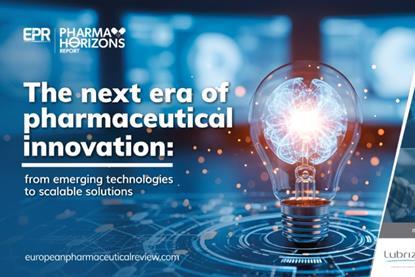
The next era of pharmaceutical innovation: from emerging technologies to scalable solutions
Explore seven expert perspectives on the technologies and challenges shaping the future of pharmaceutical development and manufacturing.
 Article
European Pharmaceutical Review Issue 2 2026
EPR Issue 2 includes articles on manufacturing, drug formulation, microbiology, downstream bioprocessing, and more.
 Opinion
What will shape the future of advanced therapies in Europe?
Following his opening keynote at this year’s Advanced Therapies Europe conference in Barcelona, Professor Jacob George, MHRA Chief Medical & Scientific Officer, explores the evolving regulatory landscape for advanced therapy medicinal products.
News
 News
NewsFDA approves novel self-administered autoinjector for generalised myasthenia gravis
US approval of UCB’s Zilbrysq provides a second self-administration option for AChR antibody-positive patients with the rare disease.
 News
NewsMerck KGaA strengthens rare disease pipeline with $1.3bn Silence acquisition
Investment involves potential best-in-class therapy from siRNA specialist Silence Therapeutics.
 News
NewsSanofi begins construction on next-generation insulin facility in Frankfurt
New manufacturing plant set to strengthen supply security for insulin in Europe.
 News
NewsCHMP recommends first broad RAS-targeted therapy for metastatic pancreatic cancer
The EMA’s human medicines committee’s positive opinion is based on data showing the oral therapy reduced the risk of death by more than fifty percent compared to chemotherapy.
From our partners

Large-scale AAV manufacturing for non-rare diseases
As AAV therapies move beyond rare disease indications, manufacturing scalability becomes critical. Learn how an integrated approach to process development can help reduce risk, improve yields, and prepare for commercial success.
European Pharmaceutical Review Issue 2 2026
EPR Issue 2 includes articles on manufacturing, drug formulation, microbiology, downstream bioprocessing, and more.

Demonstrating airflow integrity and VHP compatibility in automated settle plate monitoring
Download this application note to learn how the MAS-100 Libra® supports automated settle plate exposure while maintaining airflow integrity, first-air conditions and effective VHP decontamination in critical aseptic environments.
Opinion and interviews

Manufacturing the route: oral and injectable drug delivery
Jennifer Gattari of Pfizer CentreOne discusses how patient needs, evolving delivery formats and emerging manufacturing trends are shaping the pharmaceutical industry, from oral solid dose products to sterile injectables.

What will shape the future of advanced therapies in Europe?
Following his opening keynote at this year’s Advanced Therapies Europe conference in Barcelona, Professor Jacob George, MHRA Chief Medical & Scientific Officer, explores the evolving regulatory landscape for advanced therapy medicinal products.
- Previous
- Next








Join now
Unlock exclusive industry insights
- Bookmark articles and resources to access anytime
- Enjoy free access to industry leading resources, webinars and insights
- Stay informed with the latest news and breakthroughs in drug discovery
- Receive updates and recommendations tailored to your research interests
Upcoming Webinars

Webinar
The impact of negative control stability on recombinant endotoxin testing
Discover how to achieve stable negative control (NC) performance for sensitive and precise recombinant endotoxin testing.

Webinar
Building quality and consistency into accelerated cell and gene therapy development
How can cell and gene therapy manufacturers move programmes forward faster without compromising quality, scalability or regulatory readiness?
The impact of negative control stability on recombinant endotoxin testing
Building quality and consistency into accelerated cell and gene therapy development
On-demand Webinars
- Previous
- Next